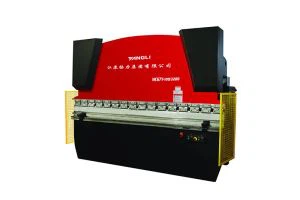
Can a sheet metal bending machine bend different angles?
As a supplier of sheet metal bending machines, I often encounter inquiries from customers about the machine's ability to bend different angles. This is a crucial question, as the flexibility to achieve various bending angles is a key factor in many sheet metal fabrication projects. In this blog post, I will delve into the topic and provide insights into the capabilities of sheet metal bending machines when it comes to bending different angles.
Understanding the Basics of Sheet Metal Bending
Before discussing the machine's ability to bend different angles, it's essential to understand the basic principles of sheet metal bending. Bending is a process that involves deforming a sheet of metal along a straight axis to achieve a specific angle. The bending process is typically carried out using a sheet metal bending machine, which applies a force to the metal sheet to cause it to bend.
The angle of bend is determined by several factors, including the type of machine, the tooling used, the thickness and type of the metal sheet, and the bending method. Different applications may require different bending angles, ranging from simple 90-degree bends to complex multi-angle bends.
Capabilities of Sheet Metal Bending Machines
Modern sheet metal bending machines are designed to be highly versatile and can bend a wide range of angles. Most machines can easily achieve common angles such as 90 degrees, 120 degrees, and 135 degrees. However, their capabilities extend far beyond these standard angles.
Programmable Machines
Many of the advanced sheet metal bending machines, such as the WC67K Series NC Press Brake, are numerically controlled (NC) or computer numerical controlled (CNC). These machines allow operators to program specific bending angles with high precision. The NC or CNC system controls the movement of the bending tool and the backgauge, ensuring accurate and repeatable bends. With these machines, it's possible to achieve angles within a very narrow tolerance, often within a fraction of a degree.


Manual and Semi - Automatic Machines
Even manual and semi - automatic sheet metal bending machines, like the WC67Y Series Common Hydraulic Press Brake, can bend different angles. Operators can adjust the tooling and the position of the metal sheet to achieve the desired angle. While the precision may not be as high as that of CNC machines, with proper skill and experience, operators can still achieve a wide range of angles.
Factors Affecting the Bending Angle
Several factors can affect a sheet metal bending machine's ability to bend different angles:
Material Properties
The type and thickness of the metal sheet play a significant role. Different metals have different ductility and strength properties. For example, aluminum is more ductile than stainless steel, which means it can be bent to more extreme angles without cracking. Thicker sheets generally require more force to bend and may have limitations on the minimum radius and maximum angle of bend.
Tooling Design
The design of the bending tool, including the punch and die, is crucial. Different tool profiles are available for different bending angles. For sharp bends, a tool with a small radius is required, while for larger angles, a tool with a larger radius may be more suitable. Using the wrong tooling can result in inaccurate angles, damage to the metal sheet, or premature wear of the tooling.
Machine Capacity
The capacity of the bending machine, such as its tonnage and stroke length, also affects the achievable angles. A machine with higher tonnage can apply more force, which is necessary for bending thicker or stronger materials. The stroke length determines the maximum height of the bend that can be achieved.
Applications Requiring Different Bending Angles
There are numerous applications in various industries that require sheet metal to be bent at different angles:
Automotive Industry
In the automotive industry, sheet metal parts such as chassis components, body panels, and brackets often need to be bent at specific angles to fit the overall design of the vehicle. These parts may require a combination of simple and complex angles to ensure proper functionality and aesthetics.
Electronics Industry
Electronic enclosures and chassis are typically made from sheet metal. They may need to be bent at different angles to accommodate internal components, provide proper ventilation, and ensure a secure fit. Precision bending is crucial in this industry to meet the strict requirements of electronic devices.
Construction Industry
In construction, sheet metal is used for roofing, siding, and ductwork. These applications often require bending at various angles to conform to the building's design and structure. For example, roofing panels may need to be bent at angles to follow the slope of the roof.
How Our Sheet Metal Bending Machines Excel
At our company, we offer a wide range of sheet metal bending machines that are designed to meet the diverse needs of our customers. Our WC67K Series NC Press Brake provides high - precision bending with its advanced numerical control system. It can handle a variety of materials and thicknesses, allowing for accurate bending of different angles.
The WC67Y Series Common Hydraulic Press Brake is a reliable option for those who need a more cost - effective solution. It offers flexibility in bending different angles with its adjustable tooling and user - friendly operation.
Conclusion and Call to Action
In conclusion, a modern sheet metal bending machine can indeed bend different angles. Whether you need simple 90 - degree bends or complex multi - angle configurations, there is a machine suitable for your needs. Our company is committed to providing high - quality sheet metal bending machines that offer excellent performance and versatility.
If you are in the market for a sheet metal bending machine and have specific requirements regarding bending angles, we encourage you to contact us. Our team of experts can provide you with detailed information, technical support, and help you choose the right machine for your application. Let's start a conversation about how our machines can meet your sheet metal bending needs.
References
- Metals Handbook: Forming and Forging, Volume 14A, ASM International
- Sheet Metal Fabrication Handbook, McGraw - Hill Education