What is the crowning system in a hydraulic press brake?
As a supplier of hydraulic press brakes, I've witnessed firsthand the transformative impact of advanced technologies on metal fabrication processes. One such technology that stands out is the crowning system in a hydraulic press brake. In this blog post, I'll delve into what the crowning system is, how it works, and why it's an essential feature for precision bending operations.
Understanding the Basics of a Hydraulic Press Brake
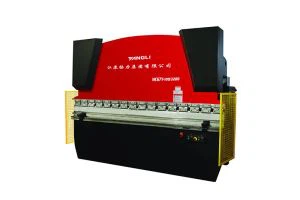
Before we dive into the crowning system, let's briefly review what a hydraulic press brake is. A hydraulic press brake is a machine tool used for bending sheet metal and plate materials. It consists of a punch and a die, between which the metal is placed. When the punch descends, it applies force to the metal, causing it to bend to the desired angle.
Hydraulic press brakes come in various types and sizes, each designed to meet specific bending requirements. At our company, we offer a range of high - quality hydraulic press brakes, including the WC67Y Series Common Hydraulic Press Brake, HB Series Servo Drive Press Brake, and MB8 Series Hydraulic Press Brake. These machines are equipped with advanced features to ensure efficient and accurate bending operations.
What is the Crowning System?
The crowning system in a hydraulic press brake is a mechanism designed to compensate for the deflection that occurs during the bending process. When a hydraulic press brake applies force to bend a metal sheet, the machine's frame and the tooling experience deflection. This deflection can cause the bent part to have a non - uniform bend angle across its length, resulting in an inaccurate and inconsistent product.
The crowning system works by applying a counter - force to the lower beam of the press brake to counteract the deflection. It typically consists of a series of hydraulic cylinders or mechanical wedges that are integrated into the lower beam of the press brake. These cylinders or wedges can be adjusted to provide a variable amount of upward force along the length of the lower beam, effectively compensating for the deflection and ensuring a uniform bend angle across the entire length of the bent part.
How Does the Crowning System Work?
There are two main types of crowning systems: hydraulic and mechanical.
Hydraulic Crowning System
A hydraulic crowning system uses a series of hydraulic cylinders that are placed beneath the lower beam of the press brake. These cylinders are connected to a hydraulic control system that can independently adjust the pressure in each cylinder. When the press brake is in operation, the control system calculates the amount of deflection based on factors such as the material thickness, bend length, and bending force. It then adjusts the pressure in each cylinder to apply the appropriate counter - force to the lower beam.
The advantage of a hydraulic crowning system is its high level of precision and flexibility. It can be easily adjusted to accommodate different bending requirements, and it can provide a smooth and continuous compensation across the length of the lower beam.
Mechanical Crowning System
A mechanical crowning system uses a series of mechanical wedges that are placed beneath the lower beam. These wedges can be adjusted manually or automatically to change the height of the lower beam at different points along its length. When the press brake is in operation, the wedges are adjusted to provide the necessary counter - force to compensate for the deflection.
Mechanical crowning systems are generally more cost - effective than hydraulic crowning systems. However, they may not offer the same level of precision and flexibility as hydraulic systems, especially for complex bending operations.


Why is the Crowning System Important?
The crowning system is an essential feature in a hydraulic press brake for several reasons:
Improved Bending Accuracy
By compensating for the deflection, the crowning system ensures that the bent part has a uniform bend angle across its length. This results in higher - quality products with greater dimensional accuracy, which is crucial for applications where precision is required, such as in the aerospace, automotive, and electronics industries.
Reduced Scrap and Rework
When the bend angle is consistent across the length of the part, there is less chance of the part being rejected due to inaccurate bending. This reduces the amount of scrap material and the need for rework, which can save time and money in the production process.
Enhanced Tooling Life
The crowning system helps to distribute the bending force more evenly across the tooling. This reduces the stress on the punch and die, which can extend their service life and reduce the frequency of tooling replacement.
Increased Productivity
With a crowning system, operators can achieve accurate bending results more quickly and easily. They don't have to spend as much time adjusting the tooling or making multiple test bends to achieve the desired bend angle. This increases the overall productivity of the press brake and allows for faster turnaround times on production jobs.
Considerations When Choosing a Crowning System
When choosing a hydraulic press brake with a crowning system, there are several factors to consider:
Type of Crowning System
As mentioned earlier, hydraulic crowning systems offer higher precision and flexibility, while mechanical crowning systems are more cost - effective. Consider your specific bending requirements and budget when choosing between the two types.
Adjustability
Look for a crowning system that offers easy and precise adjustability. This will allow you to quickly adapt to different bending jobs and ensure consistent results.
Compatibility with the Press Brake
Make sure that the crowning system is compatible with the specific model of the hydraulic press brake you are considering. Some crowning systems may be designed for specific press brake sizes or configurations.
Control System
If you choose a hydraulic crowning system, pay attention to the quality of the control system. A good control system should be user - friendly, reliable, and capable of providing accurate compensation based on the bending parameters.
Conclusion
The crowning system is a critical component in a hydraulic press brake that plays a vital role in ensuring accurate and consistent bending results. Whether you are a small - scale fabricator or a large - scale manufacturer, investing in a hydraulic press brake with a high - quality crowning system can significantly improve the quality of your products, reduce production costs, and increase your overall productivity.
At our company, we are committed to providing our customers with the best hydraulic press brakes and related technologies. Our range of press brakes, including the WC67Y Series Common Hydraulic Press Brake, HB Series Servo Drive Press Brake, and MB8 Series Hydraulic Press Brake, are equipped with advanced crowning systems to meet the diverse needs of our customers.
If you are interested in learning more about our hydraulic press brakes or have any questions about the crowning system, please don't hesitate to contact us. Our team of experts is ready to assist you in finding the right solution for your bending requirements. We look forward to the opportunity to work with you and help you take your metal fabrication business to the next level.
References
- "Metal Forming Handbook", ASM International
- "Hydraulic Press Brake Technology", Machinery Publishing Company