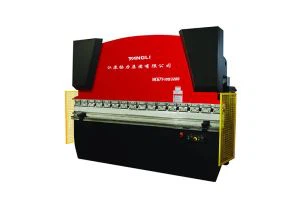
As a hot die forging press supplier, I understand the critical role that a well - programmed control system plays in the performance and efficiency of these powerful machines. In this blog, I'll guide you through the process of programming the control system of a hot die forging press.
Understanding the Basics of a Hot Die Forging Press Control System
Before delving into programming, it's essential to have a solid grasp of the basic components of a hot die forging press control system. The control system is the brain of the press, responsible for coordinating various mechanical, hydraulic, and electrical functions. The main components include sensors, actuators, a programmable logic controller (PLC), and a human - machine interface (HMI).
Sensors are used to measure various parameters such as force, position, temperature, and pressure. For example, load cells can measure the force applied during the forging process, while position sensors determine the location of the ram. Actuators, on the other hand, are the devices that carry out actions based on the control signals. Hydraulic cylinders and electromagnetic valves are common actuators in hot die forging presses.
The PLC is the heart of the control system. It receives input from sensors, processes the data according to pre - programmed logic, and then sends output signals to the actuators. The HMI provides an interface for operators to interact with the press. They can set parameters, monitor the process, and troubleshoot issues through the HMI.
Step 1: Defining the Requirements
The first step in programming the control system of a hot die forging press is to define the requirements clearly. This involves consulting with the end - users, such as forging shops or manufacturers, to understand their specific needs. Considerations include the type of forgings to be produced (e.g., automotive parts, aerospace components), the production volume, and the required precision.
For instance, if the press is going to be used for high - volume production of small automotive parts, speed and repeatability will be crucial factors. On the other hand, if it's for manufacturing large, high - precision aerospace components, accuracy and force control will be of utmost importance.
Step 2: Selecting the Right PLC and Software
Once the requirements are defined, the next step is to select the appropriate PLC and programming software. When choosing a PLC, factors such as processing power, input/output (I/O) capacity, and communication capabilities should be taken into account.
For hot die forging presses, a PLC with high - speed processing and a large number of I/O points is usually required. Popular PLC brands in the industrial automation field include Siemens, Allen - Bradley, and Mitsubishi.
The programming software should be user - friendly and support the programming language that suits your needs. The most common programming languages for PLCs are ladder logic, function block diagram (FBD), structured text (ST), and sequential function chart (SFC). Ladder logic is widely used due to its simplicity and resemblance to traditional electrical circuit diagrams.
Step 3: Designing the Control Logic
After selecting the PLC and software, it's time to design the control logic. This is the core part of programming the control system. The control logic should be able to handle all aspects of the forging process, from the initial setup to the final forging operation.
Initial Setup
The initial setup phase includes tasks such as power - on self - tests, home position calibration of the ram, and setting the initial parameters for the forging process. For example, the PLC can check the status of all sensors and actuators during the power - on self - test. If any faults are detected, it can send an alarm signal to the HMI.
Forging Cycle
The forging cycle consists of several steps, including closing the die, applying the forging force, holding the force for a certain period, and then opening the die. The PLC needs to precisely control the movement of the ram and the pressure applied by the hydraulic system.
To ensure the quality of the forgings, the control logic should also include safety interlocks. For example, the ram should not start moving if the die is not properly closed, and the hydraulic pressure should be released immediately if the force exceeds the predefined limit.
Step 4: Integrating the HMI
The HMI is an important part of the control system as it allows operators to interact with the press easily. The HMI should be designed to display real - time information about the forging process, such as the current force, position, and temperature. It should also provide a way for operators to set parameters and start or stop the process.
When integrating the HMI with the PLC, communication protocols need to be established. Common communication protocols include Modbus, Profibus, and Ethernet/IP. These protocols ensure reliable data transfer between the HMI and the PLC.
Step 5: Testing and Debugging
After programming the control system, it's crucial to conduct thorough testing and debugging. Testing can be divided into offline testing and online testing.
During offline testing, the PLC program can be simulated using the programming software. This allows you to check the logic of the program without actually running the press. You can also inject simulated inputs from sensors to see how the program responds.
Online testing involves running the press with the programmed control system. This is the ultimate test to ensure that the press operates as expected. Any issues detected during testing, such as incorrect actuation of the ram or inaccurate sensor readings, should be debugged and fixed promptly.

Step 6: Maintenance and Upgrades
Once the control system is in operation, regular maintenance is required to ensure its reliability. This includes checking the sensors and actuators for proper functioning, updating the PLC firmware, and backing up the control program.
Over time, as the production requirements change or new technologies become available, the control system may need to be upgraded. For example, you may want to add new sensors to measure additional parameters or improve the communication capabilities of the PLC.
Conclusion
Programming the control system of a hot die forging press is a complex but rewarding task. By following the steps outlined above, you can ensure that the press operates efficiently, safely, and produces high - quality forgings.
As a hot die forging press supplier, we offer a wide range of solutions, including the HFP/HGP Series Forging Press. Our experienced team can assist you in programming and optimizing the control system of your forging press to meet your specific needs. If you are interested in purchasing a hot die forging press or need help with control system programming, please feel free to contact us for a detailed consultation.
References
- "Industrial Automation: Principles and Applications" by David A. Bell
- "Programmable Logic Controllers: Principles and Applications" by Michael J. Tomczyk
- Technical manuals of major PLC manufacturers such as Siemens, Allen - Bradley, and Mitsubishi.